ALWAYS remember the rain | National Gallery of Australia
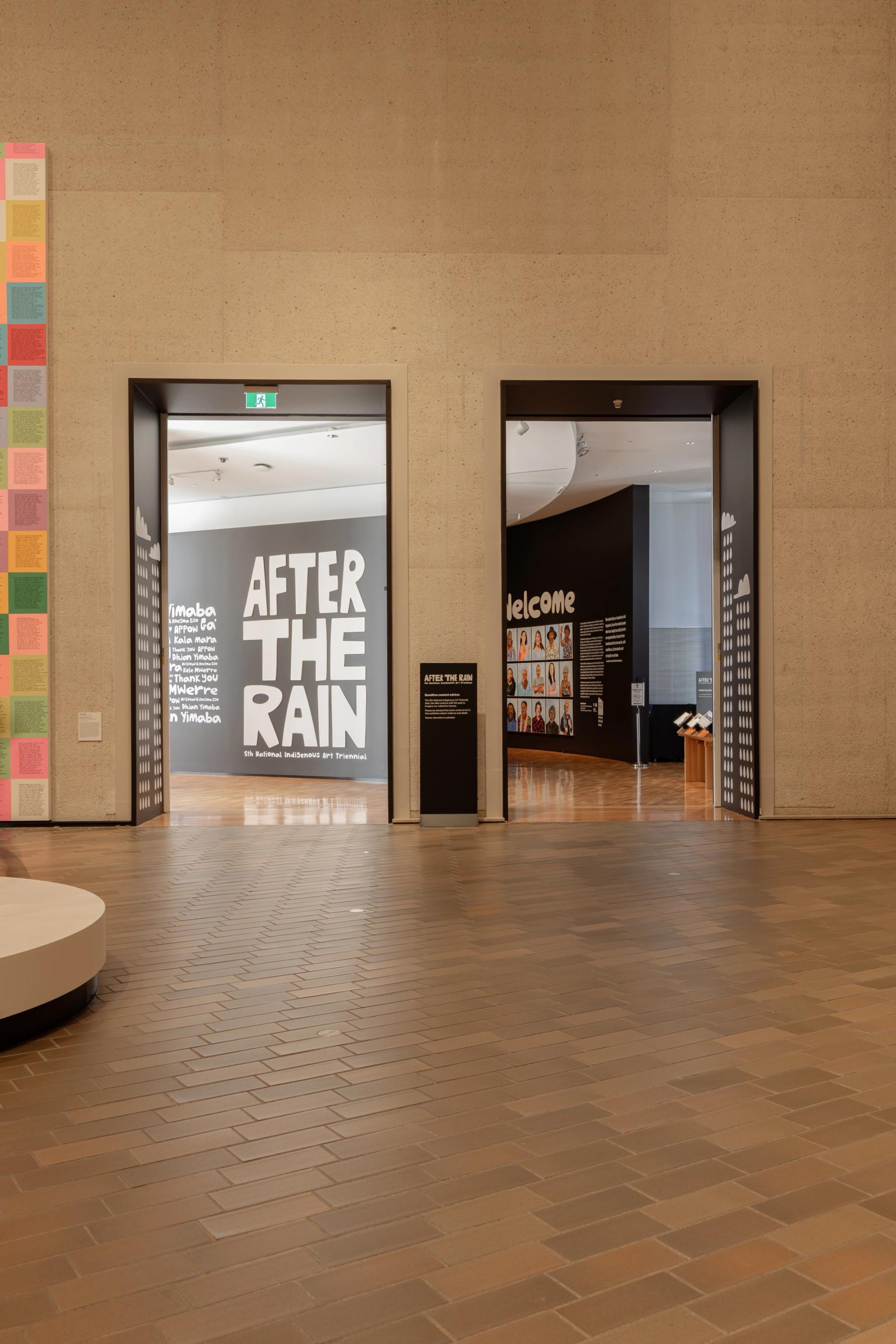
When Tony Albert invited Blaklash to contribute to the 5th National Indigenous Art Triennial, After the Rain, he opened the door to a space at the end of the exhibition that wasn’t quite a gallery, wasn’t quite a home, and wasn’t quite what audiences would expect in an exhibition space.
Country: Ngunnawal and Ngambri
Role: Exhibition design and curation
Client: National Gallery of Australia
Location: Kamberri (Canberra), Australian Capital Territory
Collaborators: Tony Albert (Artistic Director); National Gallery of Australia exhibition design team; Tom Skeehan of Skeehan Studio.
Curated by Tony, a Girramay/Yidinji/Kuku-Yalanji artist and the Triennial’s Artistic Director, After the Rain brings together ten large-scale, immersive and multi-disciplinary installations by First Nations artists from across the country at the National Gallery of Australia.
Each artist brings a distinct voice to the Triennial's themes of renewal, resilience and what it means to begin again. Blaklash’s space, ALWAYS remember the rain, sits at the very end of the exhibition, designed as a point of reflection as visitors rejoin the everyday world. It’s a “blak home” filled with art, music, fashion and furniture; a place to exhale, take stock and imagine what comes next.
An invitation and an evolution🔗
When the invitation first came from Tony, the original concept was a retail space at the close of the exhibition; a playful “exit through the gift shop” moment celebrating First Nations enterprise.
“The intention was to give audiences an opportunity to experience the breadth of Indigenous creativity beyond the gallery walls, through products, fashion and objects for everyday life,” explains Blaklash Director Amanda Hayman.
As conversations with the NGA progressed, it became clear there were practical challenges to delivering a retail component within the exhibition itself. Rather than treating this as a setback, Tony generously reframed the opportunity, inviting Blaklash to participate as artists and collaborators within the exhibition.
“We interpreted our role as an opportunity to bring the original idea of celebrating Indigenous enterprise into the exhibition in a different way,” Amanda says.
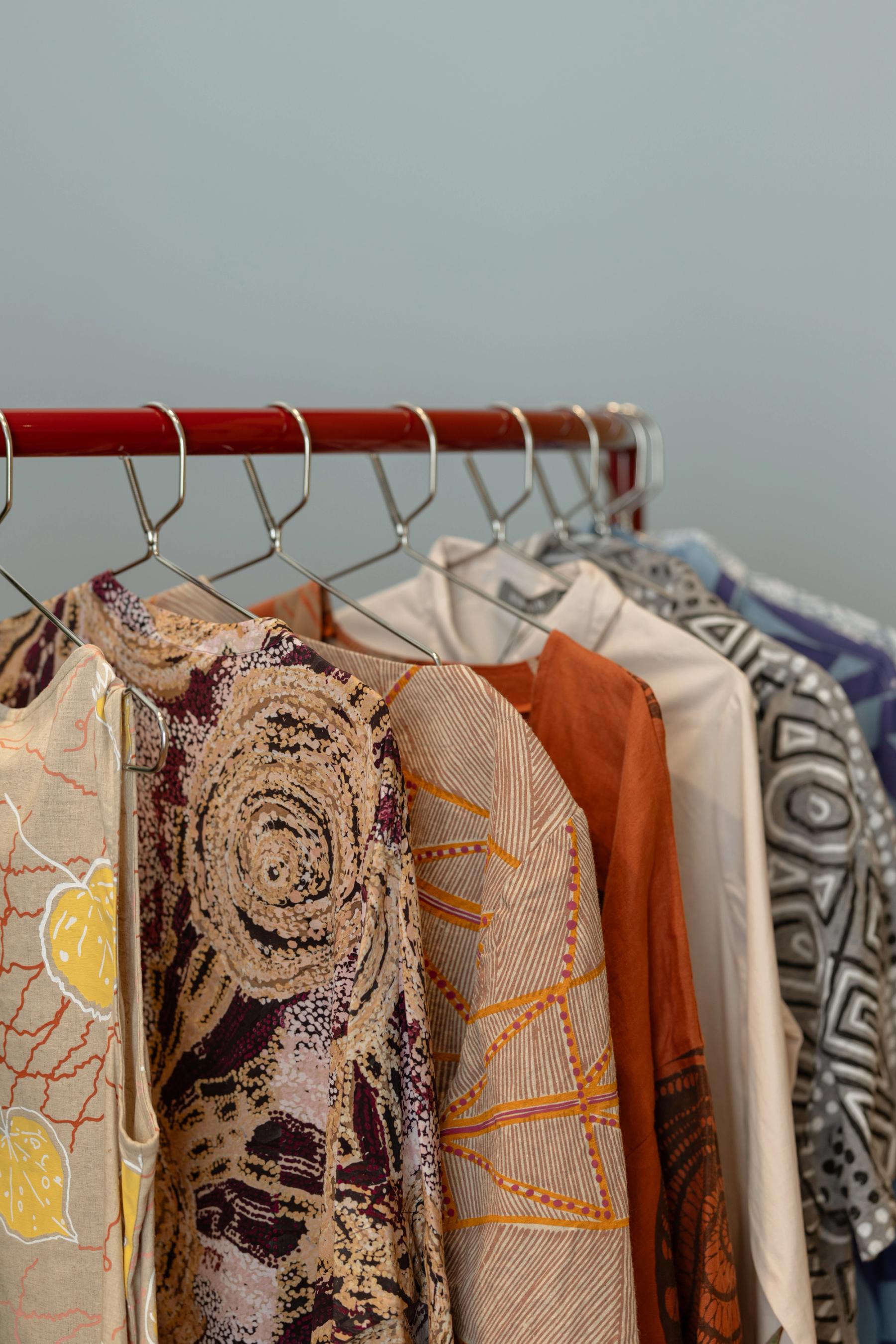
That reinterpretation became ALWAYS remember the rain, an installation made up of home-inspired rooms that showcase First Nations art, products, music, fashion and furniture as part of a lived environment. It also created the platform to introduce Elements by Blaklash, the studio’s furniture company, and its first collection, Deep Time.
“Tony showed great trust in inviting Blaklash to contribute, embracing the intersection of art and design as part of the exhibition’s broader vision,” Amanda adds. “While we’re not artists in the traditional sense, his openness to collaboration reflects a genuine spirit of innovation.”
A space to exhale🔗
After the Rain takes audiences on a powerful emotional journey. As Amanda describes it, the exhibition moves “from works that are bold, political and confronting, to others that hold quiet strength, tenderness and reflection. There are moments that challenge, moments that overwhelm and moments that stay with you.
We wanted our space to offer something different at the end of that emotional journey; a place to exhale,” Amanda continues. “A space where people could feel comfortable, sit down, take in everything they had experienced and imagine a future shaped by First Nations creativity, strength and presence. We hoped the room would feel familiar and inviting; not only a place of reflection, but one of possibility.
The framing came naturally from the exhibition’s title. “We were inspired by the natural cycles that Country teaches us: rain, growth, reflection, and renewal,” Amanda explains. “These rhythms became a guiding metaphor for how we approached each space.”
The guided tour🔗
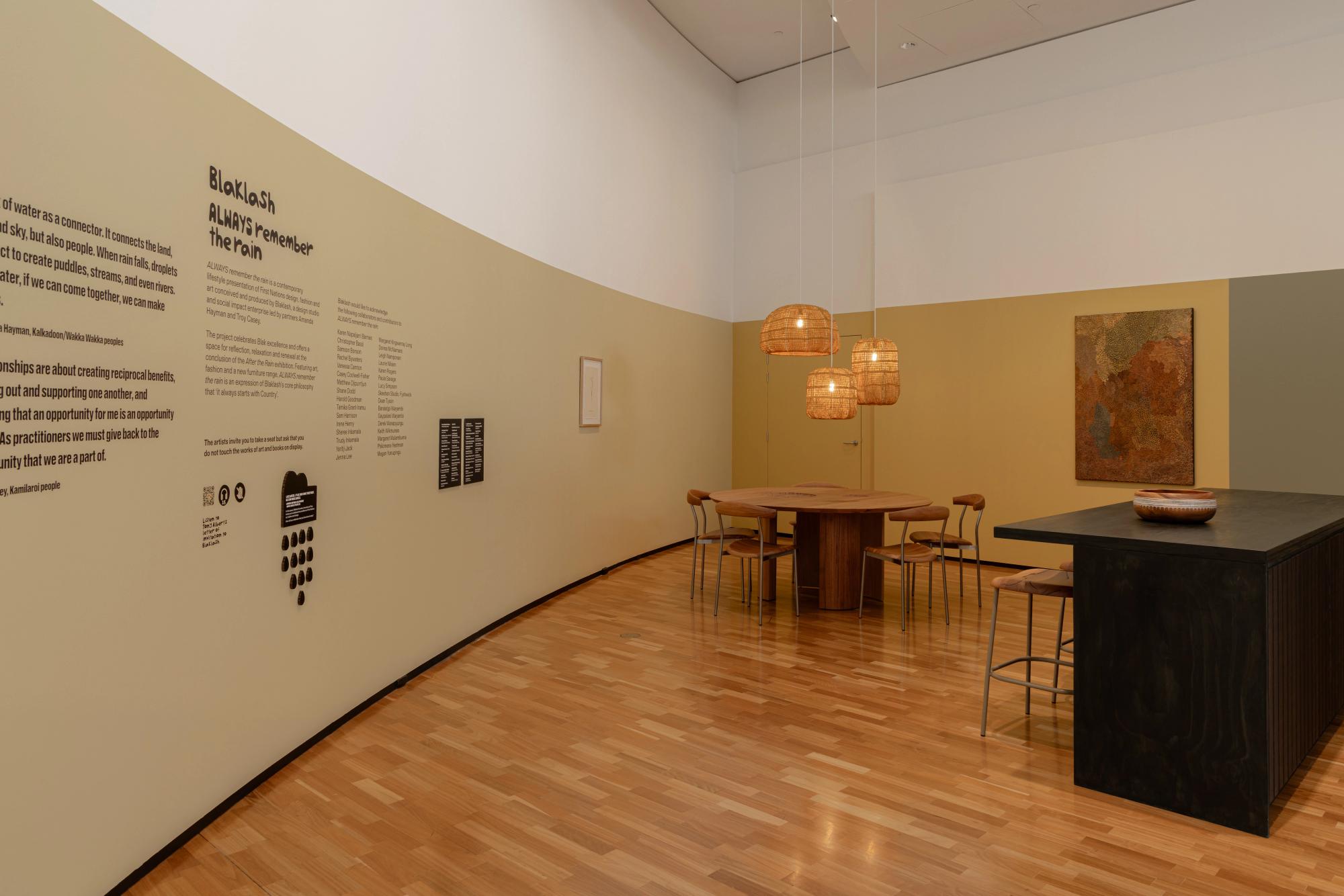
ALWAYS remember the rain unfolds like a blak display home, inviting visitors to move through a series of spaces that each hold a different season and emotion.
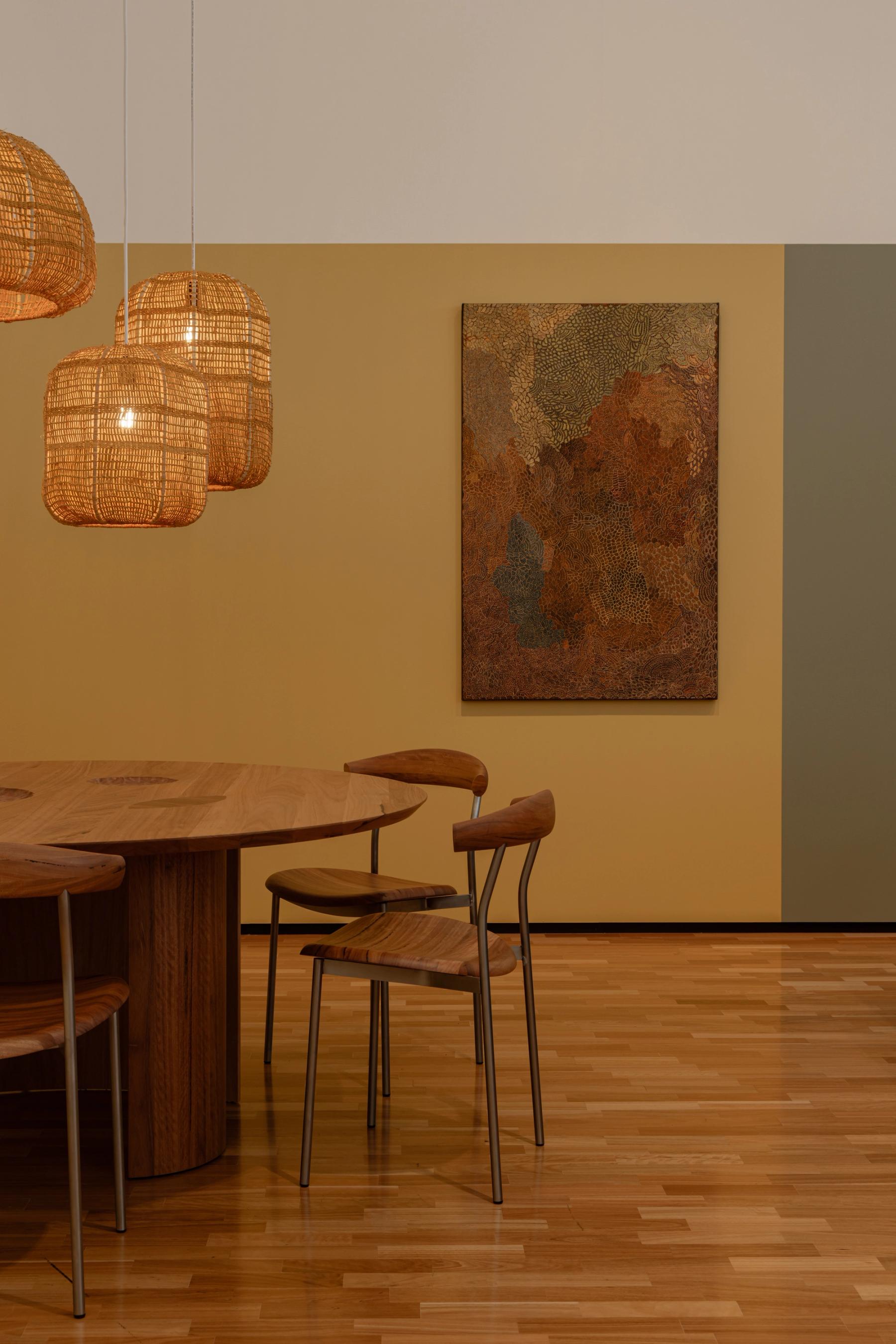
The journey begins in a warm yellow dining room. Woven pendant lights by the Ramingining weavers (Bula’bula Arts) are suspended above a feature round dining table from the Elements by Blaklash range. The room is filled with artworks and objects that speak to light, fire and resistance.
“We imagined this as the first sunlight after the rain; a space that carries warmth, optimism and the comfort of gathering together after difficult times,” Amanda says. “It’s about sharing food, stories and hope for what comes next.”
From there, visitors move into the kitchen, washed in rich green tones. This room symbolises regrowth and renewal, celebrating bush foods, nourishment and the ongoing relationship with Country. “We wanted it to be a space about abundance, creativity and the importance of caring for Country and one another,” Amanda explains, “particularly the way rain allows things to flourish.”
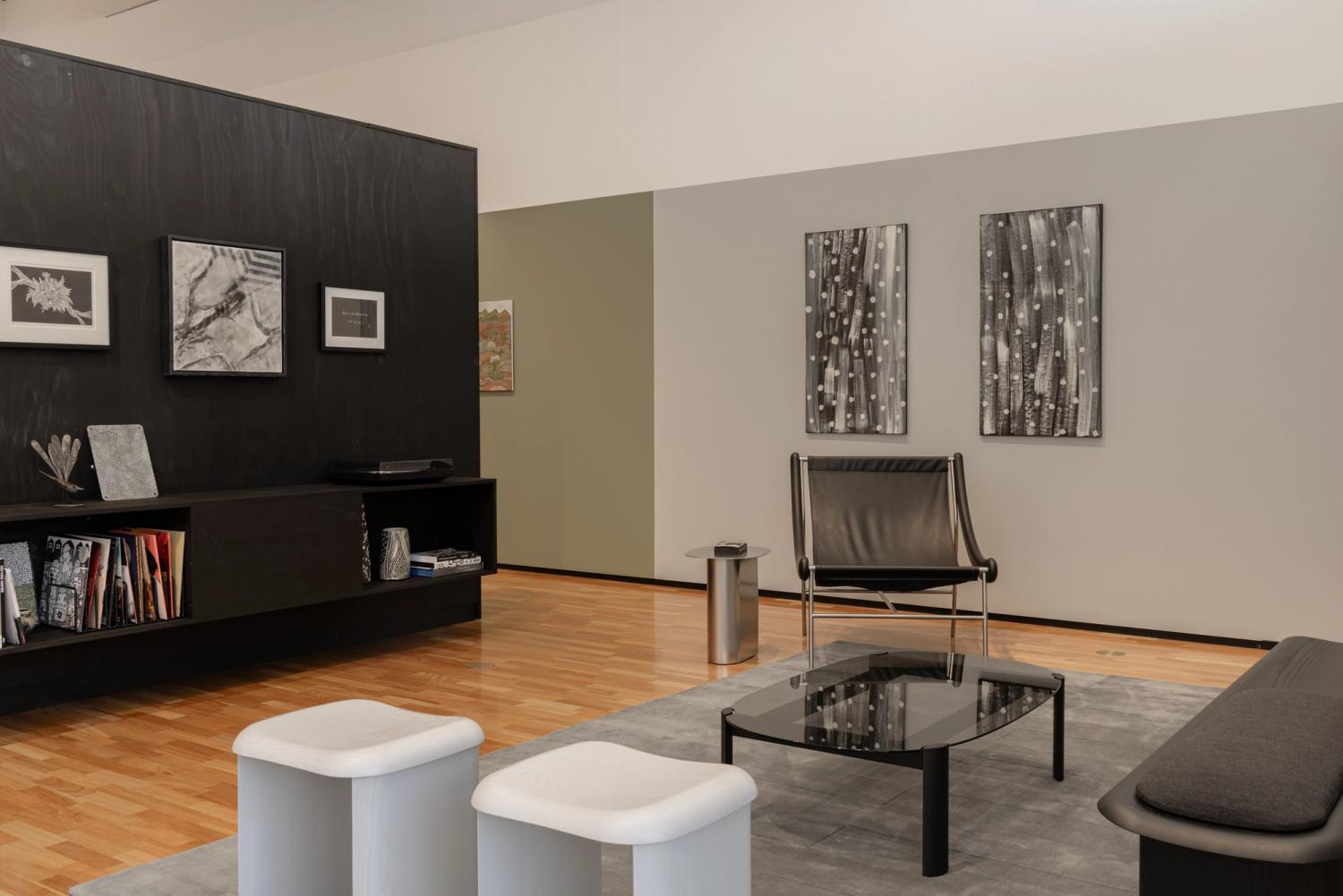
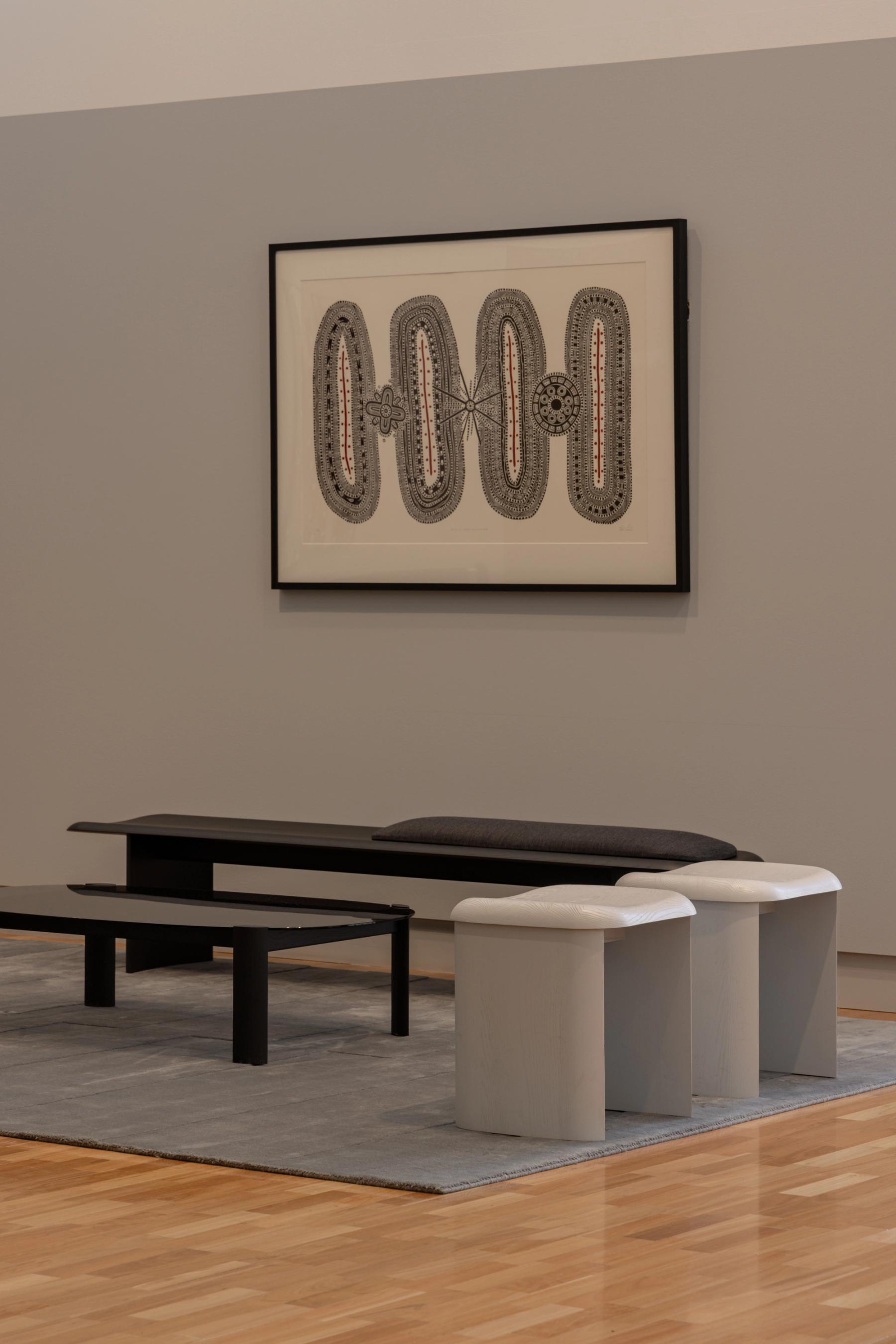
The journey then opens into a black-and-white lounge room and listening space. Here, the mood quiets. Rain becomes a metaphor for hardship, memory and the difficult periods that shape us.
“We wanted people to pause, look through books and listen to music that speaks to resilience, survival and the strength that comes from remembering history,” Amanda says. “It’s a space for reflection; for acknowledging the past and the lessons it carries.”
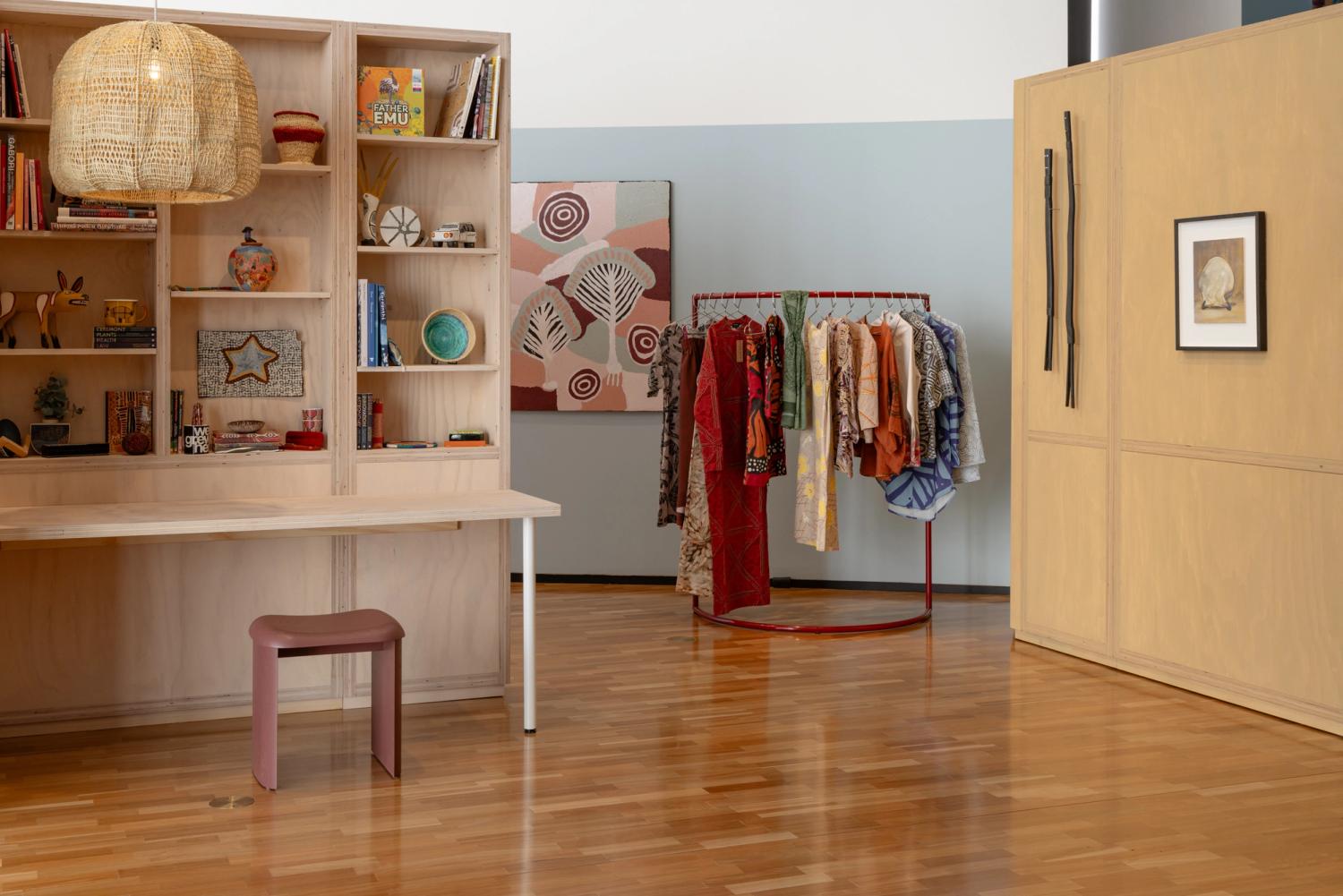
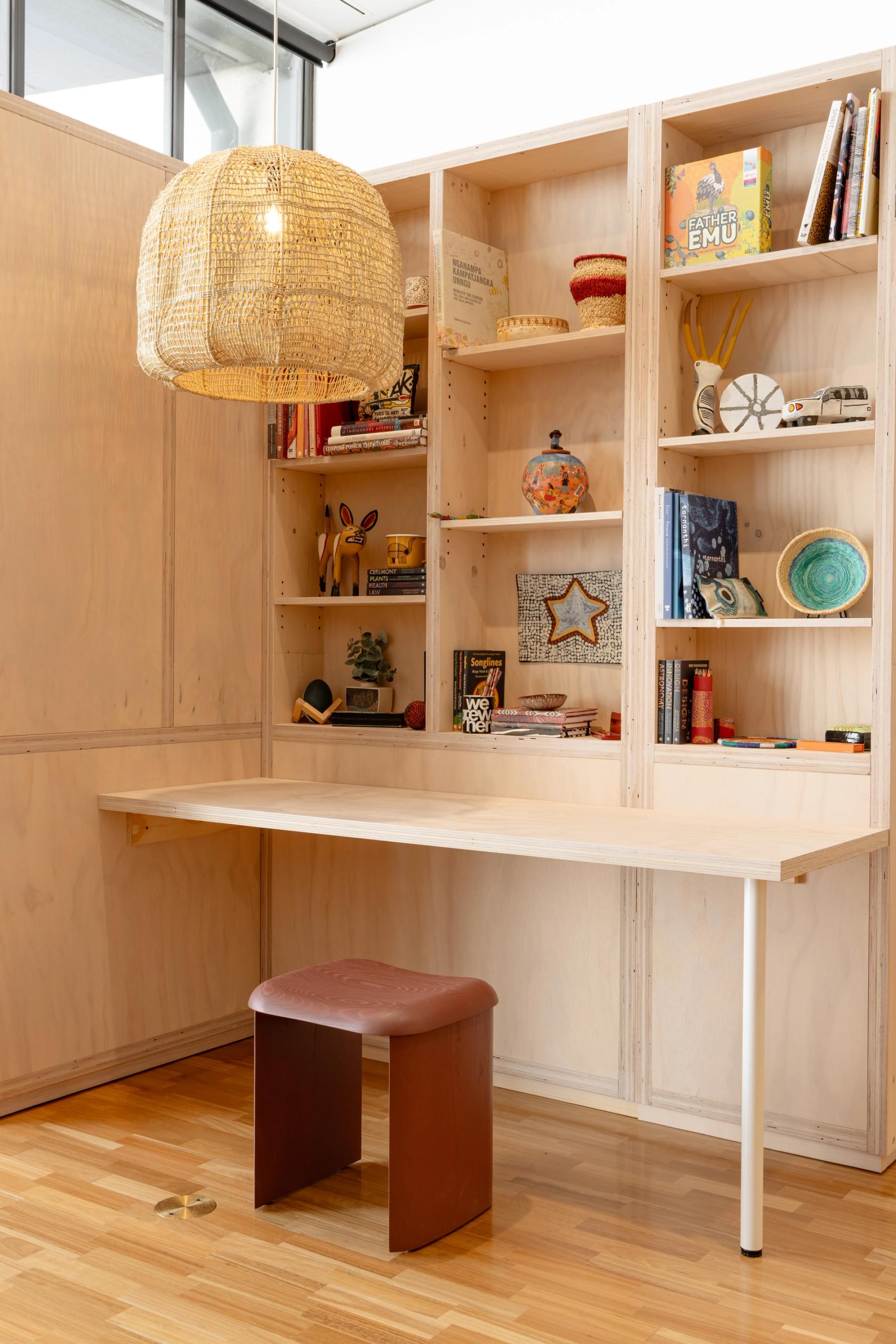
Finally, the installation opens into the brightest and most colourful rooms: a study nook and a child’s bedroom. These spaces are about possibility, joy and self-determined futures. The child’s room is especially personal, decorated with items belonging to Amanda’s son, Charlie.
“By including Charlie’s books and toys, the room becomes a symbol of the future,” Amanda says.
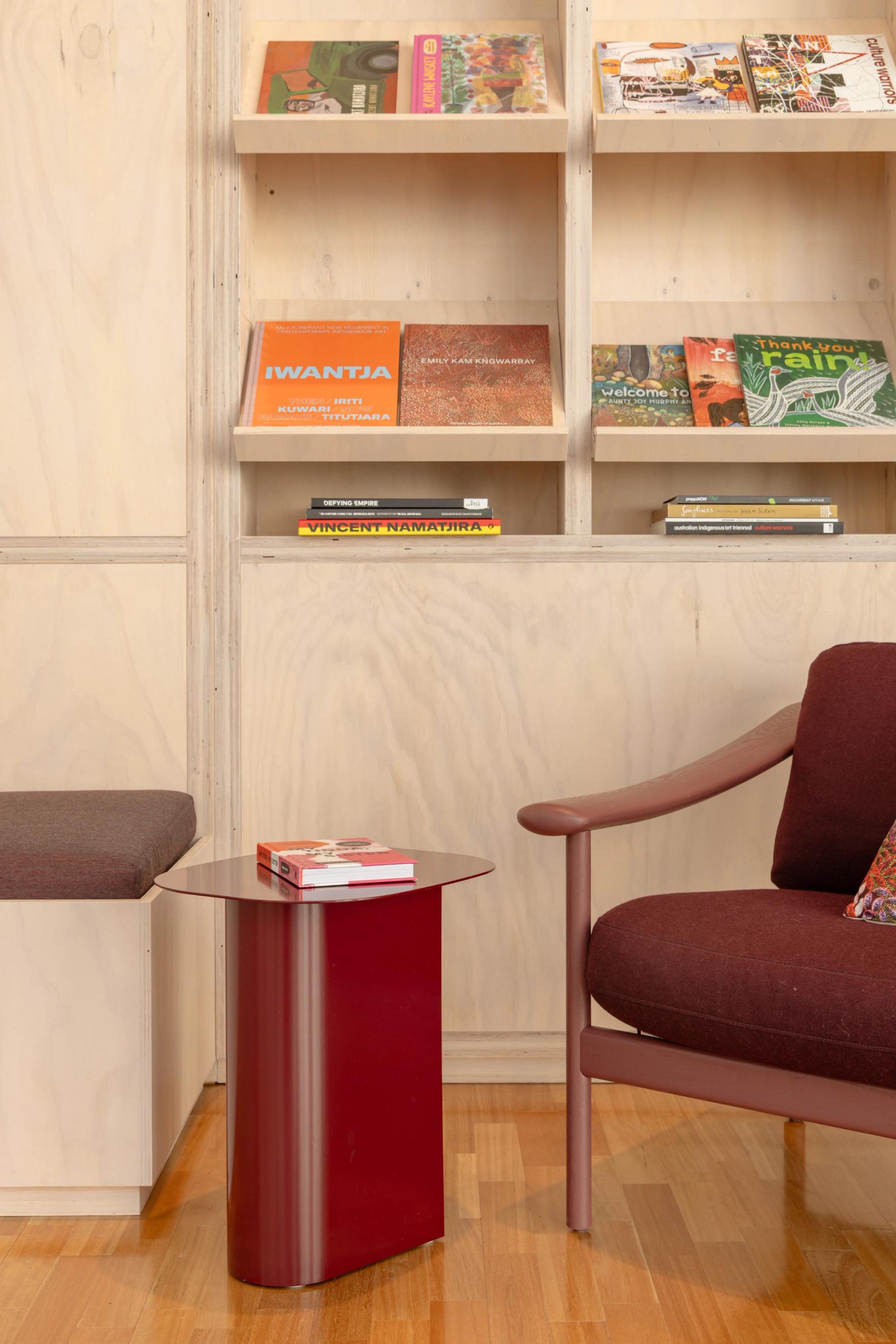
Throughout the installation, furniture shaped by deep time sits alongside diverse First Nations artworks from across the continent. Each piece has been carefully chosen and connected through colour, material and story.
At home with First Nations design🔗
By placing First Nations art, fashion and objects within a domestic context, Blaklash sought to challenge how audiences think about where Indigenous creativity belongs.
“It shifts the conversation from seeing these works as something distant, precious or separate from everyday life, to recognising them as living parts of our homes and daily experiences,” Amanda says.
Too often First Nations art is framed only within the white walls of a gallery or museum. We wanted to show that these works are not only culturally significant, but also contemporary, functional and deeply connected to the way we live.
The home setting also matters because of what home means in First Nations cultures. “Home is where culture is lived and passed on,” Amanda says. “It’s where we gather, where we feel safe, where memories are made and where identity is expressed freely. We wanted the space to carry that feeling; to feel lived in, loved and distinctly Blak.”
The installation responds to a long-standing absence in Australian design. “Domestic spaces are rarely designed with Indigenous people, our needs, or our comfort in mind,” Amanda says. “By reimagining the home as a place of cultural connection and belonging, we affirm that our stories, knowledge, and aesthetics are not static or historical, but evolving, dynamic, and integral to the Australian identity.”
In their Elements🔗
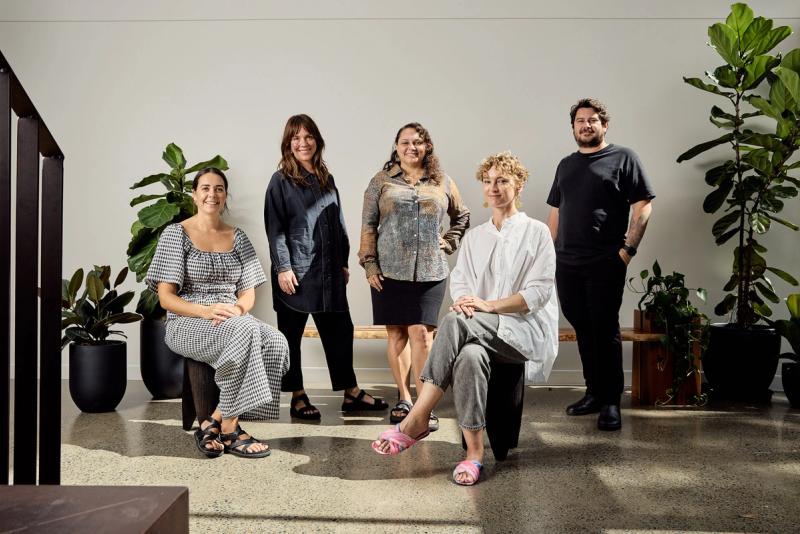
ALWAYS remember the rain marks the first full-scale presentation of Elements by Blaklash, the studio’s furniture company. The Deep Time collection was designed by Blaklash Associate Director and interior designer Erin McDonald, and realised with the expertise of Australian award-winning industrial designer Tom Skeehan.
“Elements by Blaklash explores deep time, acknowledging the layers of history, memory, and Country that shape how we live in relation to our surroundings,” Amanda says.
“The forms draw inspiration from the subtle traces left by nature and people; erosion, body imprints, pressure points, and the gentle wear of touch, celebrating organic form and imperfection while grounding each piece in authenticity and place.”
The range is crafted from sustainable timbers, steel, glass and textiles – Australian-made, high-quality, and conscious of its impact on Country.
“Introducing Elements by Blaklash through ALWAYS remember the rain felt important because the exhibition was about showing how First Nations creativity can live in our everyday lives,” Amanda says.
“Rather than presenting the furniture as stand-alone objects, we wanted people to experience the pieces in context, alongside art, books, music and the feeling of home.”
The furniture also helped shape the mood of each room, “from the warmth of the dining space to the hope and possibility of the final rooms.”
Collaboration as cultural practice🔗
The installation came together through close collaboration with the NGA’s exhibition design team. Blaklash developed the initial concept and layout, imagining how the different domestic settings would sit together and how people might move through them.
The NGA team then helped refine that vision, adapting the layout to meet work health and safety requirements, audience flow and accessibility, while ensuring the emotional rhythm of the space remained intact. They also built the custom joinery, while Blaklash made, sourced and styled the loose furniture, artworks and objects within the space.
That collaborative approach reflects how Blaklash has always worked. “Blaklash’s practice has always been about working with people rather than for them, creating spaces where ideas, stories, and perspectives can be shared and celebrated collectively,” Amanda says. “We see collaboration as a cultural value as much as a creative process; it’s how knowledge is passed on, how reciprocal relationships are strengthened, and how innovation happens in an authentic way.”
That ethos extended to every artist whose work is featured in the room. “We’ve created an installation that brings together many incredible artworks, and we want to express our deep appreciation to the artists who have trusted us to incorporate their work into the space,” Amanda says. “Their contributions give the installation its spirit; each piece adding another layer of story, beauty, and connection.”
After the rain🔗
Following its presentation in Kamberri/Canberra, After the Rain is touring nationally, taking ALWAYS remember the rain to new audiences across the country.
We hope the exhibition encourages people to think about how they engage with Indigenous art and culture in their own communities,” Amanda says. “If our work can spark curiosity, conversation, or a deeper appreciation of the ways culture continues to grow and thrive, then we’ve achieved what we set out to do.
It’s a fitting end to an exhibition built around renewal. Because as the installation reminds us, after every rain, something new begins to grow.