Cairns Gallery Precinct
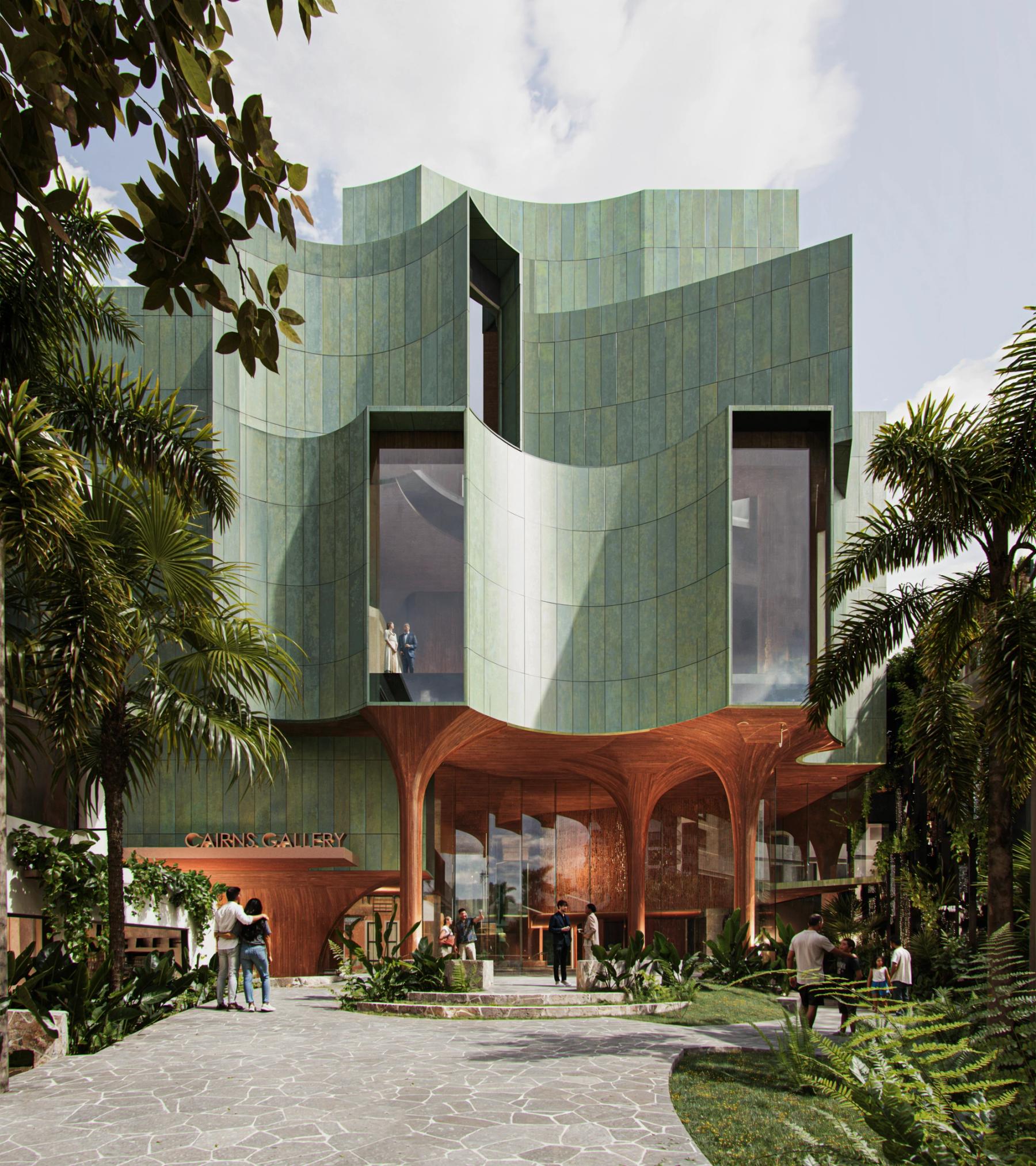
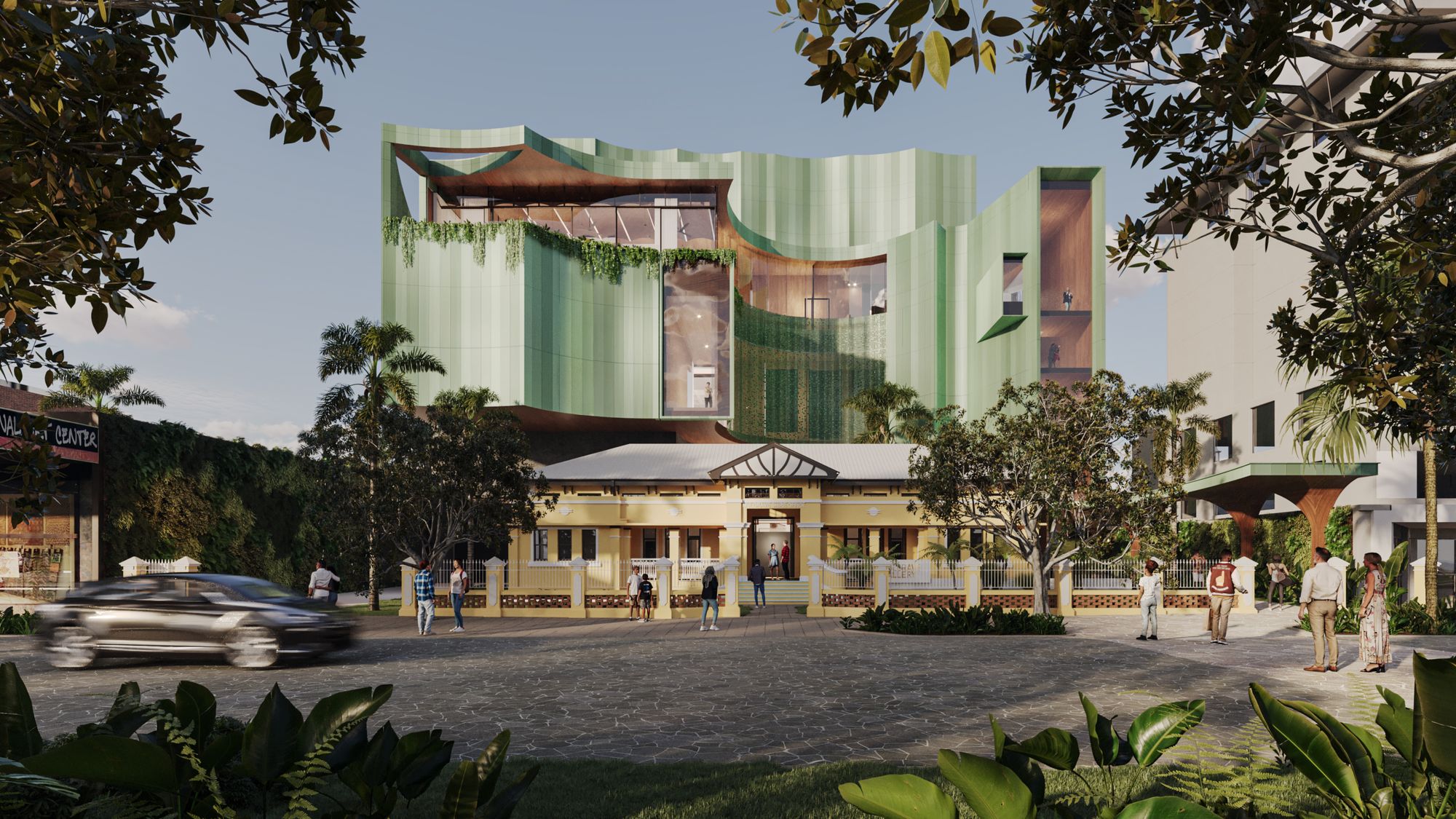
The proposed Cairns Gallery Precinct was imagined as a major new arts and cultural landmark for Gimuy (Cairns). Designed by COX Architecture, CA Architects and Urbis, the project sought to connect three heritage-listed buildings with a new, purpose-built gallery, creating an accessible, contemporary destination for art, culture and community.
Country: Gimuy Walubara Yidinji
Role: First Nations Design Consultant
Client: Cairns Regional Council
Location: Gimuy (Cairns), Queensland
Collaborators: Gimuy Walubara Yidinji Elders, COX Architecture, CA Architects, Simon Wright, Urbis, ASPECT Studios
Conceived as an outward-looking, audience-centred experience, the precinct was designed to blend gallery spaces, shaded civic areas and landscape to sit comfortably within Cairns’ tropical climate, responding to the surrounding urban environment and landscape, as well as the people who move through it.
The site itself holds deep significance for the Gimuy Walubara Yidinji people. Stories, memories (both good and bad) and longstanding relationships to Country live in the ground around the heritage Courthouse and throughout the precinct. Designing something of this scale required careful listening, understanding how these cultural layers shape history of place, and how the precinct should feel and function today.
Blaklash joined the project at the outset to guide its cultural direction. Working with the Gimuy Walubara Yidinji community, the team helped ensure the precinct was shaped by the stories, rhythms and relationships to Country that define Gimuy. Early collaboration between Elders, COX, CA Architects and Blaklash meant the first architectural concepts were developed with cultural thinking embedded from the start.
A shared cultural framework🔗
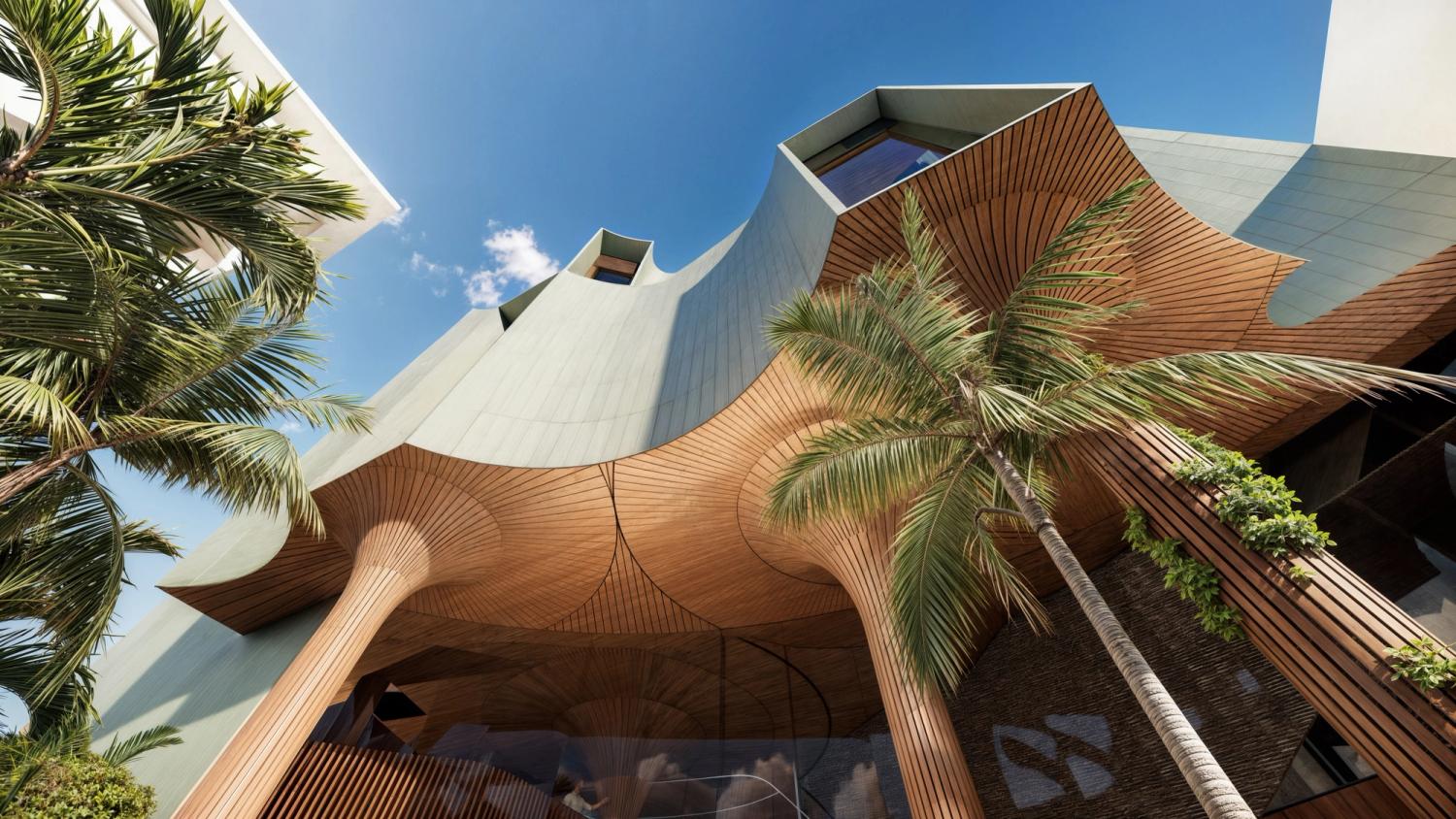
Initially, COX and CA Architects prepared their concept for a competitive tender, and Blaklash worked alongside them to embed high-level cultural thinking from the earliest sketches. Early ideas drew on the story of the Slippery Blue Fig, a species local to the region and the namesake of the local clan group and the city itself. This thinking carried into the precinct’s design language: sculptural timber columns rising like trunks and buttress roots, branching into organic rooflines that offered shelter and shade; light-catching surfaces intended to shift with the tropical sun; and an architectural presence that feels rooted in place and stands tall and proud above existing heritage buildings.
“Our first concepts explored carving,” says Blaklash Principal Tahlia Steadman, “thinking about shields, coolamons and the way those forms are shaped from trees, and what that could look like in the built form. We were also thinking about deep time, which led to the idea of a building clad in copper, so it would patina with the salt air and change colour over generations.”
Because formal engagement with Traditional Custodians wasn’t permitted during the competition phase, a process we understand is necessary to respect Traditional Custodians’ limited time and influence across a number of tender teams, these concepts were treated as a starting point rather than a fixed direction.
Once the COX and CA Architects team was selected for the project, Blaklash moved straight into full co-design with Gimuy Walubara Yidinji Elders. Early ideas were brought to community, explored, questioned and refined together.
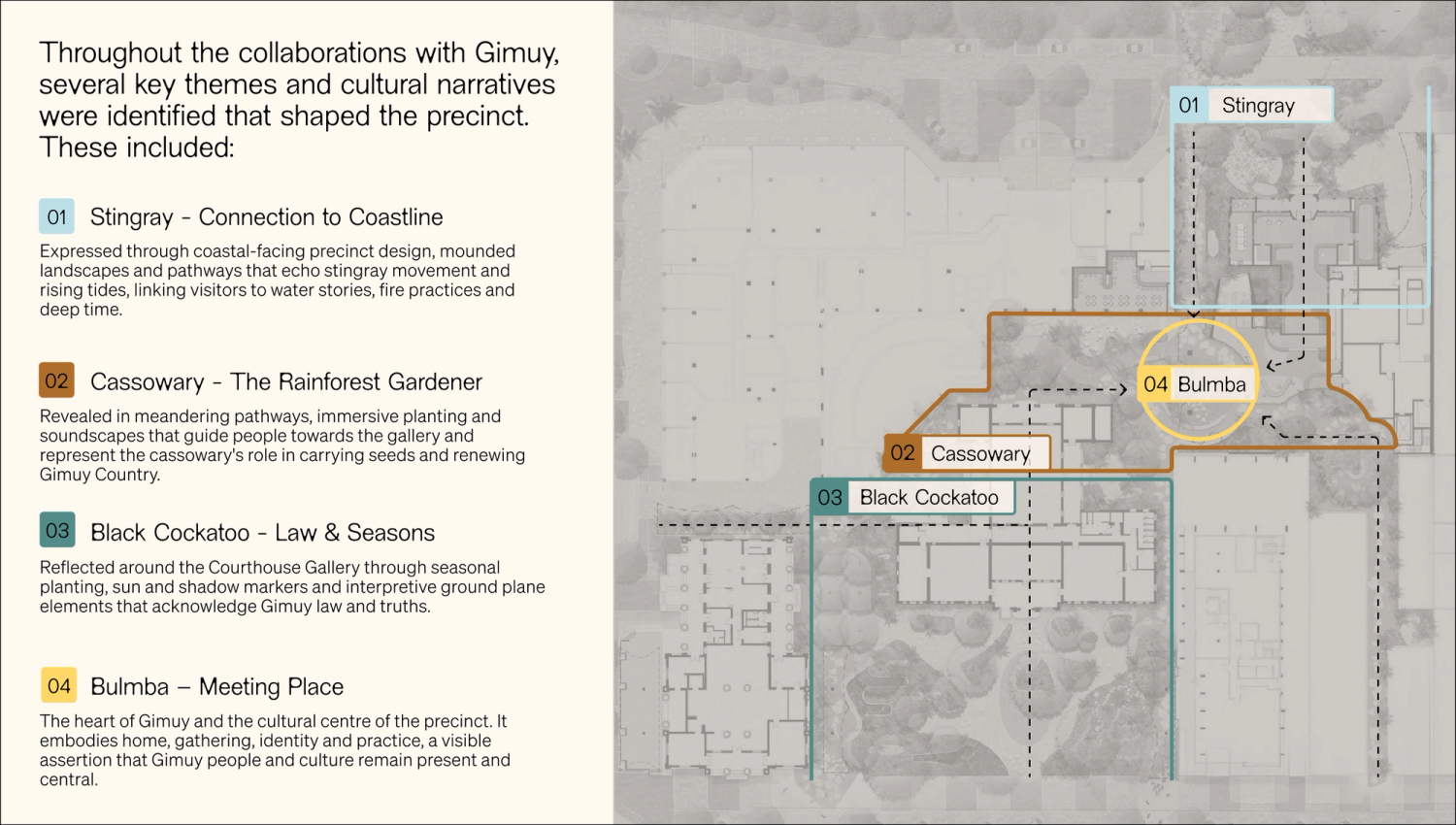
As the work progressed, Traditional Custodians brought forward stories that would form the cultural logic of the precinct. Blaklash mapped these narratives across the site so they could guide movement, form, materiality and experience.
Tahlia says early concepts drew from traditional shield designs, where Country is mapped through linework showing where to hunt, move, rest and gather, all organised around a raised central mound representing the bulmba, the home. “We looked at how the bulmba could inform the organisation of space,” she says, “with that central idea helping to shape the ceremony area as the heart of the precinct.”
From this overarching spatial framework, further cultural narratives were layered in. Stories connected to Water Country helped align the precinct with the historical shoreline, tied to the stingray, fire practices and the shifting edge of the sea. (To learn more about this, there’s an amazing conversation between late Gimuy Traditional Custodian, Gudju Gudju Fourmile, and Sir David Attenborough in Season 1, Episode 1 of David Attenborough's Great Barrier Reef). This became one of several thematic anchors shared by community, with the stingray representing the connection between fire and water; the cassowary symbolising cultural practice and guardianship; the black cockatoo expressing law and seasonal knowledge; and the bulmba grounding the precinct as a place of rest and meeting.
These stories informed how people would move through the precinct, with subtle mounding recalling the ripple of stingray wings through shallow water; ground markings echoing ancient fire practices; and pathways, openings and sensory cues shaped in response to rainforest movement, seasonal indicators and the deep connections held in Gimuy Country.
Reclaiming a complex site🔗
Responding to the heritage-listed Courthouse was one of the project’s most sensitive responsibilities. For many in the community, this building carries the weight of justice and injustice; a place tied to both trauma and resilience. Part of Blaklash’s design thinking alongside the project team envisaged the new gallery to be built over the Courthouse, prompting deeper questions about how the design could respectfully reclaim a site with such a complex past.
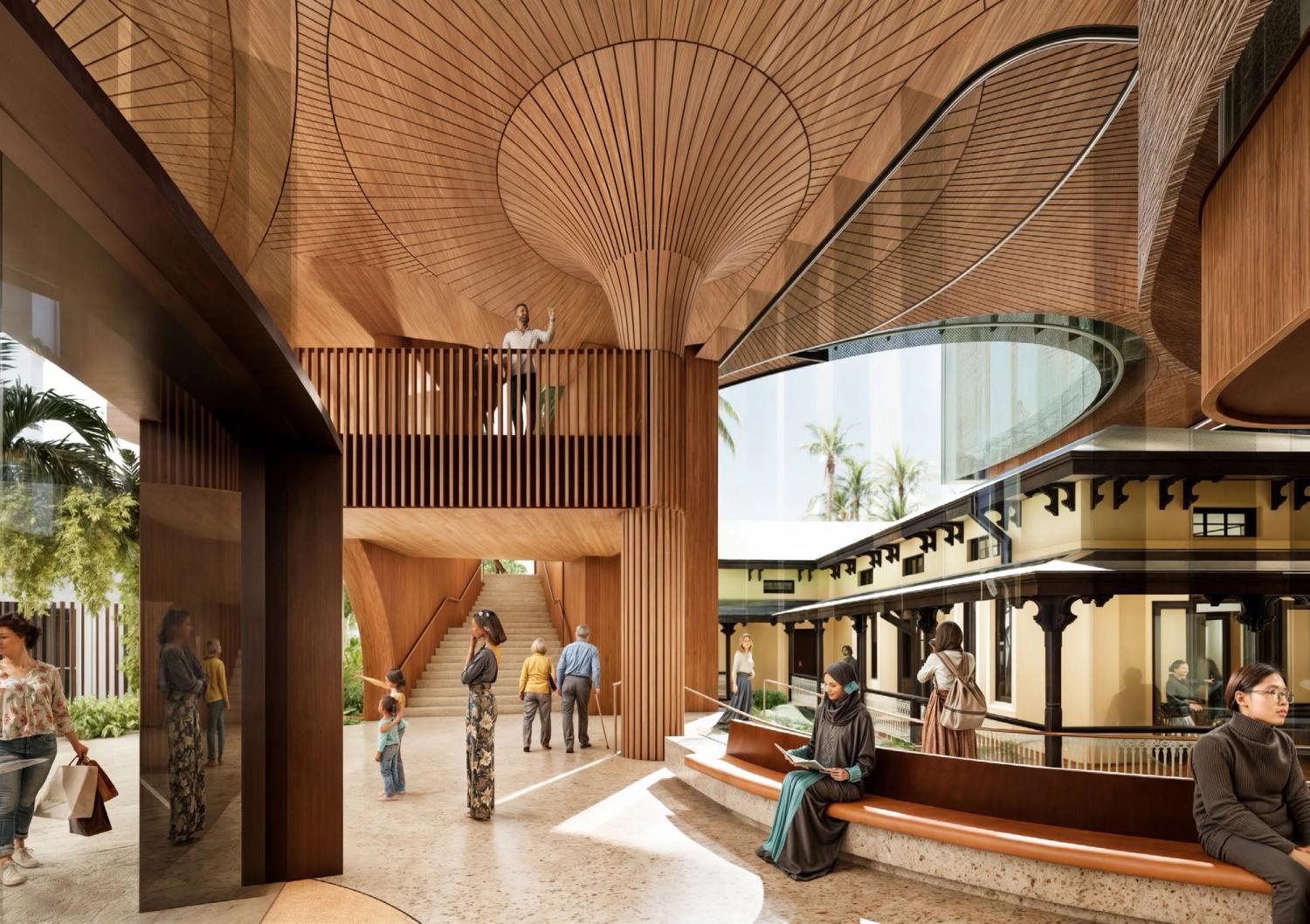
Community spoke about wanting the space to feel “grown over”, as if Gimuy itself were returning and making its presence known. This inspired the idea of the gallery hovering above the Courthouse, supported by timber columns shaped like the buttress roots of a rainforest fig. The goal was not to bury the old structure, but to allow Country to rise above it in a way that felt strong and grounded.
Heritage rules meant the Courthouse had to remain visible, with certain sightlines kept open. Even with those restrictions, the team looked for ways to give the new gallery building a meaningful cultural presence above the existing Courthouse building below, letting the design feel guided by Country rather than by the weight and feel of the existing structure.
Immersion in Country🔗
Across the precinct, the design drew on the atmosphere of moving through Rainforest Country. Dense, forest-like paths were intended to create a sense of intimacy before opening into wider gathering spaces through gentle changes in light, sound and materiality. Lush, layered planting held embedded soundscapes and subtle lighting cues, deepening the sense of reveal and immersion throughout the journey, and tying to local stories of the cassowary.
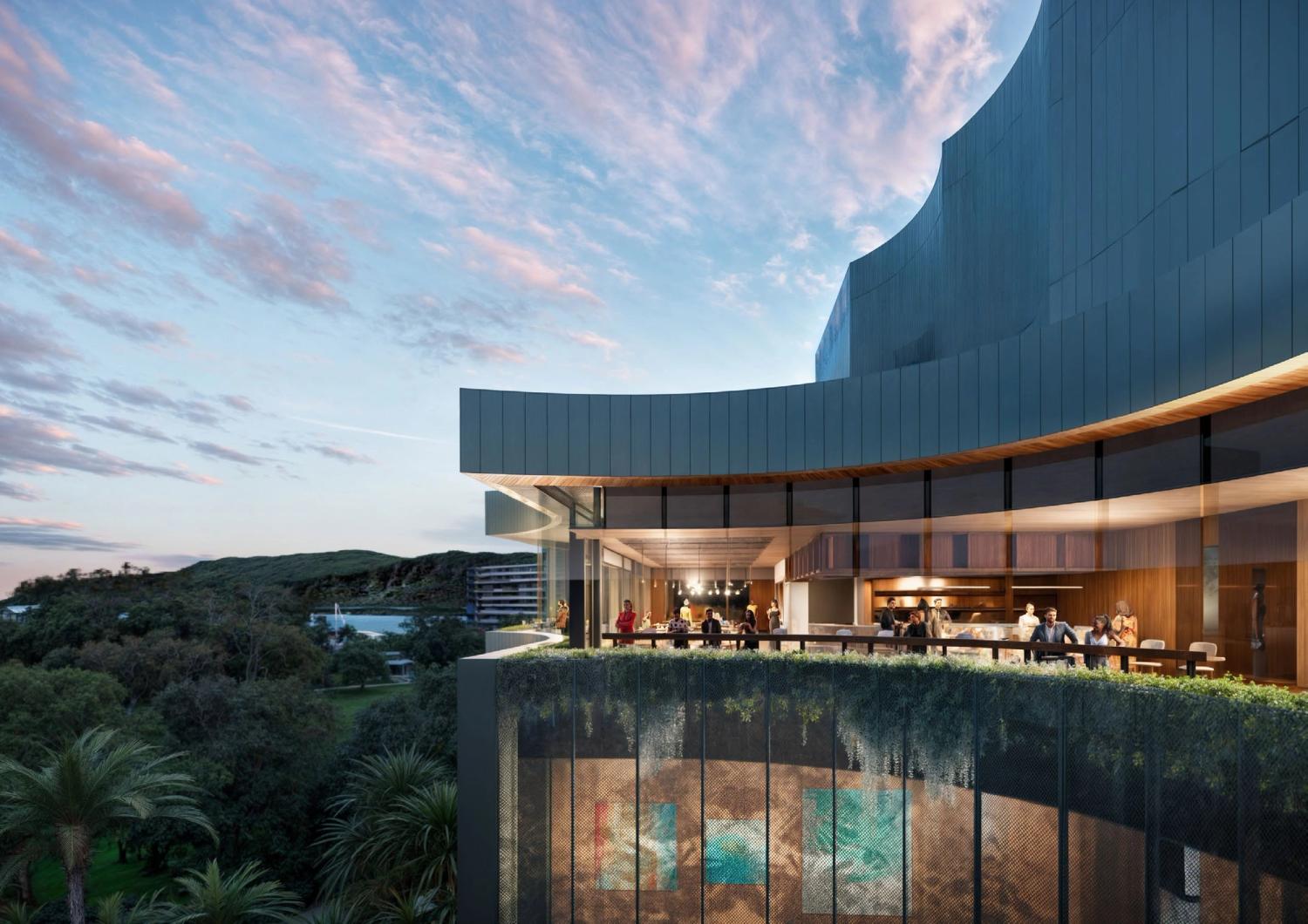
Movement unfolded as a series of transitions: narrow paths expanding into civic spaces, glimpses of mountains and ocean framed between plantings, and building forms rising like trees emerging from the landscape. At higher levels within the new gallery building, the design maintained clear views across Country, with sightlines intentionally aligned to significant markers in the landscape, both inland towards the mountains and outwards towards the sea.
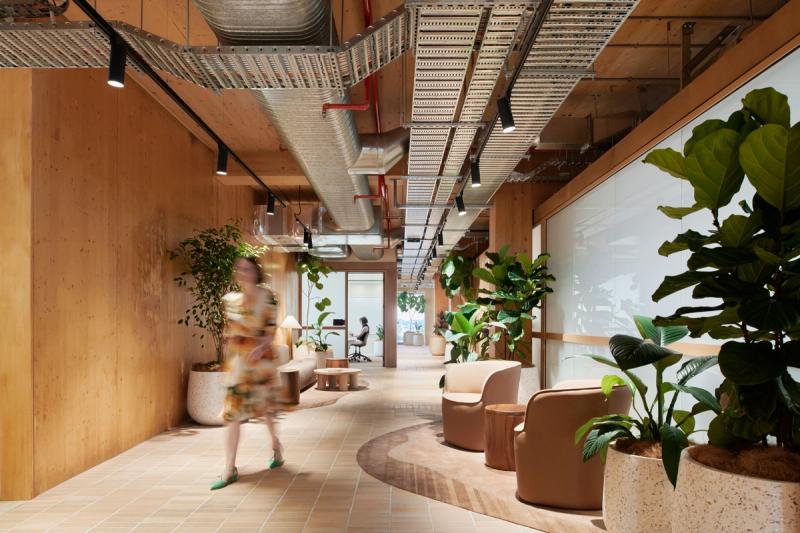
These outdoor sequences extended into the public realm, with courtyards, laneways, shaded plazas and civic lawns that stitched the precinct into the CBD and waterfront. The gallery itself was conceived as a “gallery in a garden”, with soft indoor-outdoor thresholds keeping visitors connected to Country even as they stepped inside.
It was only through the Project Team’s own immersion on Gimuy Walubara Yidinji Country that these experiences could shape design outcomes. Walking alongside Gimuy Elder, Uncle Peter ‘Bumi’ Hyde, the Project Team was part of a bulmba-making workshop, wandering through the rainforest to collect lawer cane, bush string and sheets of paperbark for the building of the home.
A collaborative legacy🔗
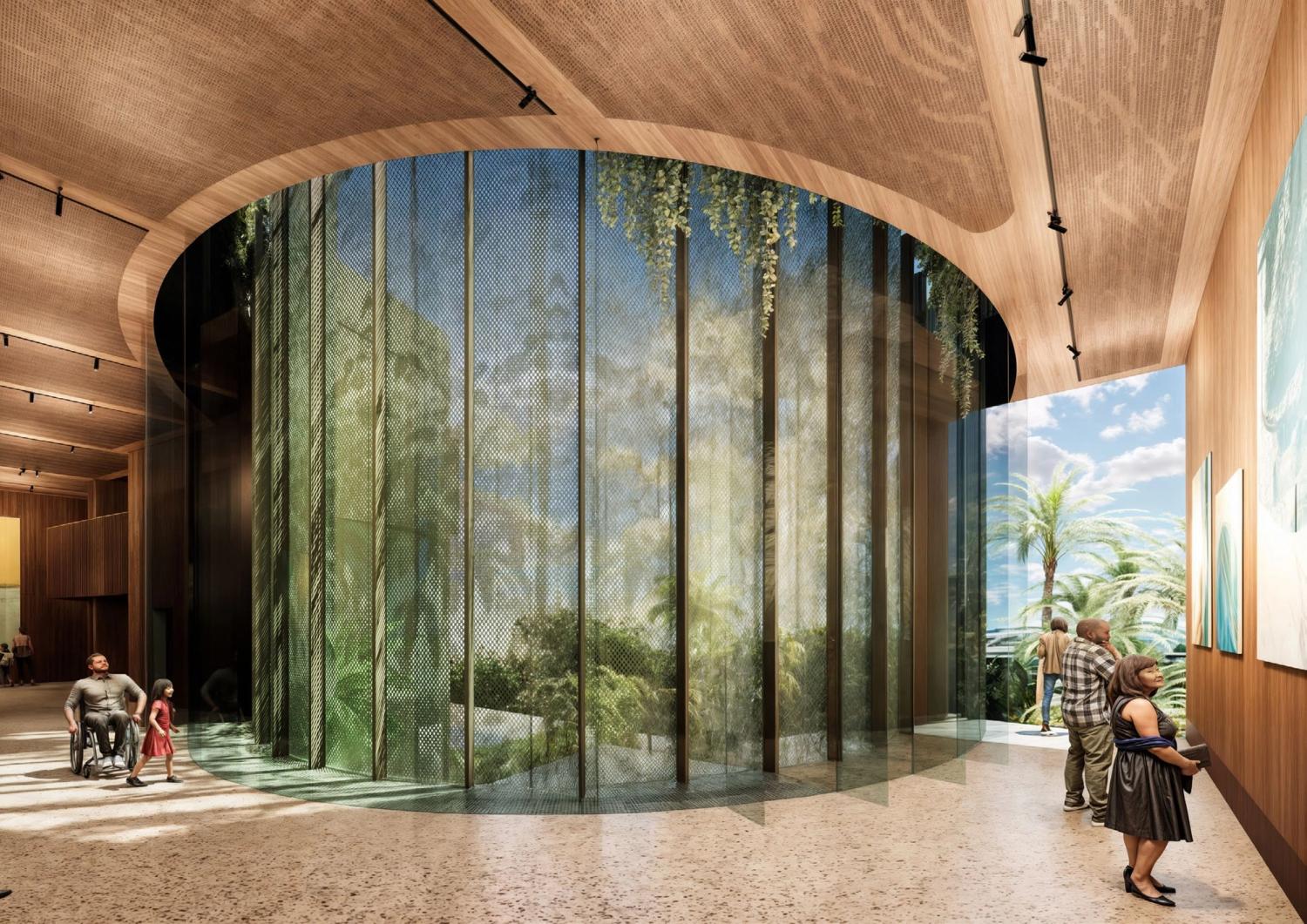
Through the co-design process, Blaklash and community identified other ways for Gimuy artists and makers to be woven into the fabric of the precinct. Integrated artworks, from customised perforated screens and shield forms acknowledging clan groups, to cultural markers within the Bulmba, were conceived as part of the architecture and landscape.
A major woven screen proposed for the lobby ensured women’s stories had a visible, central presence, imagined as a collaboration between local community and Far North Queensland art centres.
Equally important was the way the project was delivered. “This was the first time Cairns Regional Council properly went through a Traditional Custodian engagement and co-design process,” Tahlia says.
“It helped them understand that this isn’t something to be afraid of, and that it leads to richer outcomes. Since then, Council has been much more forward-thinking about engagement and bringing community voices into projects.”
The project was ultimately paused in 2025 after funding was not secured, but the relationships built through the work remain strong. The legacy of the Cairns Gallery Precinct sits in the cultural framework established, the trust strengthened and the shift it sparked in local practice.
When the moment arrives, the vision shaped by community, Blaklash, Council and the design team will still be here, ready to rise.